BLOG POST
Paying for the rain: what businesses need to know about surface water drainage charges
Most businesses pay to have rainwater taken away, but how it's charged depends on where you are. Here's how surface water drainage charges work and how to reduce them.
How does your water company charge you for rainwater?
Most businesses look at their water bill and see the water they use. Fewer notice that they’re also paying for the rain.
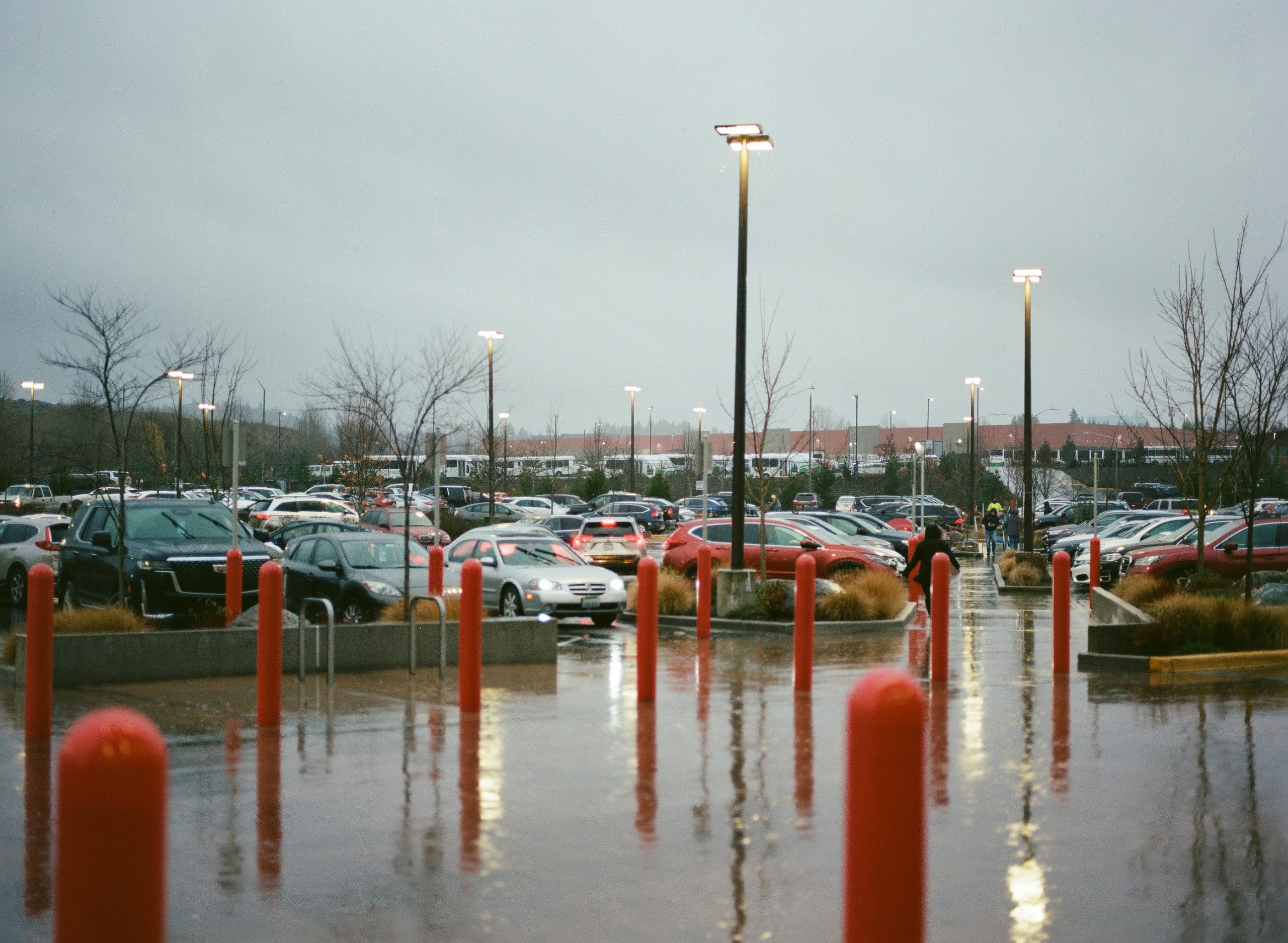
Every time it rains, water runs off your roofs, car parks, yards and paths. On most sites it ends up in the public sewer, and the water company has to take it away and deal with it. That service is surface water drainage, and it appears on your bill as its own charge.
For a small office it’s a modest line. For a site with large roofs and a big car park it can run to thousands of pounds a year. And how that figure is worked out depends entirely on where you are.
Three different ways of charging for the same thing
There’s no single national method. Each wastewater company sets its own basis of charge, which is why two similar sites in different parts of the country can pay very different amounts.
By site area. Five of the eleven major wastewater companies in England and Wales charge non-household customers according to the area of the site that drains to the sewer: United Utilities, Yorkshire Water, Northumbrian Water, Severn Trent and Hafren Dyfrdwy. The bigger your roofs and hard surfaces, the higher your banding.
By meter or supply pipe size. Several others still link the charge to the size of your water supply pipe. It’s a historic approach and it bears little relation to how much rainwater a site actually sends to the sewer. A warehouse with a huge roof and a small supply pipe can pay less than a busy café.
Within other charges. A few companies don’t show surface water separately at all and build it into the wider wastewater charge.
You won’t always see your water company’s name on the bill. Since the business water market opened up, most organisations in England are billed by a retailer, which passes on the wholesale charges set by the local water company. The basis of charge is still decided by the wholesaler.
The direction of travel is towards site area
Ofwat has favoured site area charging for a long time, on the basis that it’s fairer. Sites that put the most rainwater into the network pay the most, and sites that put in very little pay less.
Not every company has moved yet, but the shift is happening. Southern Water, for example, has set out plans to replace its pipe size charge with a site area based one for non-household customers, beginning next year. The change is designed to be revenue neutral, which means it isn’t about raising more money overall. It does mean the bill moves around. Businesses with large premises and car parks are likely to pay more. Smaller sites with high water use could pay less.
If your water company is one of those still charging by pipe size, it’s worth knowing which side of that line your site sits on before any change arrives.
How to reduce what you pay
The charge is based on what drains to the sewer, so the way to reduce it is to send less rainwater there.
Disconnect completely. If none of the surface water from your site reaches the public sewer, because it goes to a soakaway or a watercourse instead, you can usually apply to have the charge removed. That’s an option for some sites, but on most commercial premises it isn’t practical.
Reduce or slow the flow. Some water companies go further and offer allowances for sustainable drainage that reduces or attenuates what reaches the network. Northumbrian Water, for example, assesses features such as permeable paving, soakaways, infiltration trenches and rainwater harvesting when calculating a partial allowance. United Utilities runs its own sustainable drainage incentives.
The rules differ from one company to the next, though, and not all of them treat the same measures in the same way. Before you invest in anything to cut your drainage charge, check what your water company actually recognises.
Where rainwater harvesting fits in
Rainwater harvesting is one of the few measures that works on both sides of the bill. It captures water from your roof before it goes to the drain, and puts it to use for toilet and urinal flushing, irrigation, vehicle washing, washdown or process water. Every litre you use from the tank is a litre you’re not buying from the mains.
Whether it also brings your drainage charge down depends on your water company, how the system is designed and where the water ends up once it’s been used. The mains saving doesn’t depend on any of that.
The numbers vary a lot from site to site. Roof area, local rainfall, how much non-potable water you use and where a tank could go all make a difference, which is why we look at the site before recommending anything.
Start by finding out how you’re charged
If you’re not sure how your surface water charge is worked out, your bill or your retailer is the place to start. Find out which wholesaler your site sits under, what basis it uses and whether it offers any allowances for sustainable drainage.
If you’d like to understand what that means for your site, and whether rainwater harvesting or another approach would reduce your costs, call us on 01483 773373 or email enquiries@ecoprod.co.uk.