BLOG POST
Seven reasons to switch to URIMAT waterless urinals
Traditional flushing urinals can use significant volumes of potable water every single day. Multiply that across multiple washrooms and multiple sites, and the scale of consumption is often far greater than organisations realise. Switching to URIMAT waterless urinals offers a practical way to address this. Below, we explore seven key reasons why more commercial buildings are making the change.
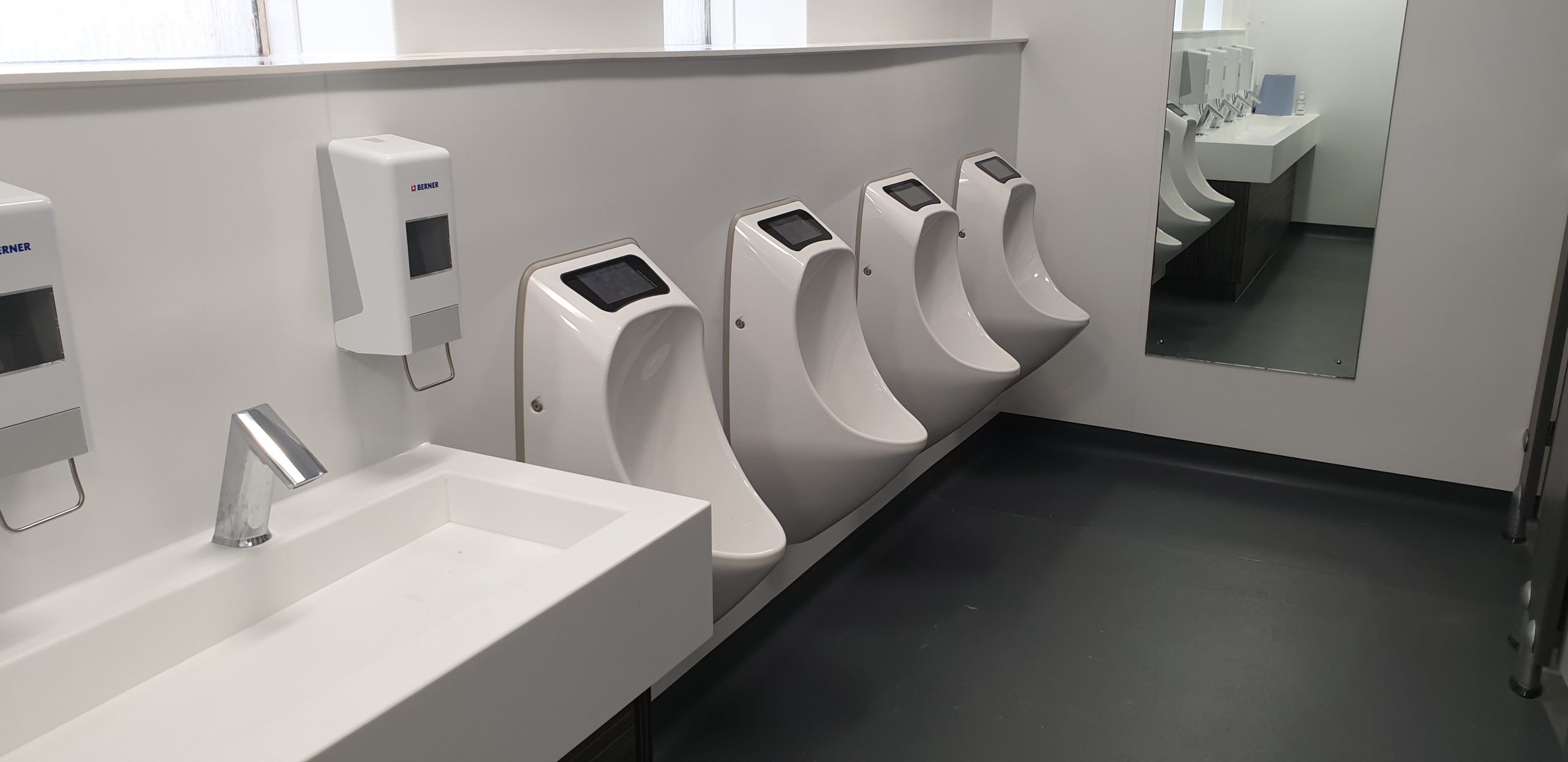
Water efficiency is no longer just a sustainability talking point. For facilities managers, estates teams and building owners, it has become a financial, operational and reputational issue.
Traditional flushing urinals can use significant volumes of potable water every single day. Multiply that across multiple washrooms and multiple sites, and the scale of consumption is often far greater than organisations realise.
Switching to URIMAT waterless urinals offers a practical way to address this. Below, we explore seven key reasons why more commercial buildings are making the change.
1. Significant reductions in water consumption
A single URIMAT waterless urinal can typically save around 100,000 litres of water per year compared to a conventional flushing urinal.
In financial terms, this equates to approximately £400 to £800 per urinal per year in water savings alone, depending on regional tariffs. For buildings with multiple urinals, the cumulative saving can quickly become substantial.
Beyond cost, there is the strategic value of reducing dependence on potable water. With rising water prices and increasing scrutiny around water usage, reducing avoidable consumption is both financially prudent and environmentally responsible.
2. Lower cleaning costs and simpler maintenance
URIMAT urinals are designed with practicality in mind. Each bowl is manufactured from a super-smooth polycarbonate or ceramic material, preventing deposits from adhering to the surface.
The moulded design eliminates internal pipework, awkward corners and sharp edges. This makes cleaning quicker and more straightforward, reducing the time required per unit.
Over time, this can translate into lower cleaning labour costs and a more consistent standard of hygiene across the washroom estate.
3. Odour-free washrooms without constant flushing
Odour concerns are often the first question raised about waterless urinals. URIMAT addresses this with a patented drain trap that prevents odours from the drainage system entering the washroom.
Because the system blocks odours at source, there is no reliance on constant flushing to mask smells. When installed and maintained correctly, the result is a consistently fresh washroom environment.
For high-traffic buildings such as offices, hospitality venues, transport hubs or educational facilities, maintaining a positive washroom experience is critical to overall perception of the space.
4. No requirement for an external maintenance contract
Some waterless systems require ongoing service contracts to replace cartridges or perform routine maintenance. URIMAT does not.
There is no obligation to tie into an external contract to change traps or carry out standard servicing. This gives facilities teams greater control and flexibility, allowing maintenance to be managed in-house if preferred.
For organisations seeking to streamline procurement and reduce long-term contractual commitments, this is a meaningful advantage.
5. Reduced risk of waste pipe blockages
Traditional flushing urinals are prone to limescale build-up and the formation of urine stones within pipework. Over time, this can lead to blockages, increased maintenance call-outs and higher reactive repair costs.
URIMAT urinals collect urine in a patented drain trap before discharging it directly into the drainage system, without the need for constant flushing.
Because there is no continuous flow of water combining with minerals and deposits, limescale and urine stone formation in the pipework is significantly reduced. The result is a lower likelihood of blockages and fewer associated maintenance issues.
6. Prevention of overflowing urinals
Overflowing urinals are not just inconvenient. They can create hygiene risks, damage flooring and generate negative user experiences.
With URIMAT, urine is immediately passed into the waste system and none is retained within the bowl. The absence of water flushing also prevents pipework from scaling up and blocking, reducing the risk of backups into the urinal.
For facilities teams, this means fewer emergency call-outs and a lower risk of disruption in busy buildings.
7. Low environmental impact across the lifecycle
The environmental benefits of URIMAT extend beyond water savings.
The system is entirely chemical-free. The bowl is made from 100% recyclable polycarbonate, and the manufacturing process is carbon neutral.
MB Active Cleaner, used for maintenance, contains no harmful chemicals. It is biological, biodegrades completely and is not dangerous to humans, animals or plants. Dermatological testing confirms that it does not irritate cleaners’ skin, unlike some of the harsher agents often required to clean traditional urinals.
For organisations with sustainability targets, ESG commitments or environmental reporting requirements, these factors contribute to a more responsible washroom strategy.
A strategic approach to washroom performance
Waterless urinals are sometimes seen as a niche alternative. In reality, they represent a practical and proven way to reduce water consumption, cut operational costs and improve washroom resilience.
For facilities managers under pressure to deliver cost savings while meeting sustainability objectives, URIMAT waterless urinals offer a straightforward intervention with measurable impact.
Reducing water use, lowering maintenance risk and simplifying cleaning processes is not just good environmental practice. It is good estate management.